Learn what API SP engine oil means, why it is important for modern petrol cars, and how it supports engine protection, oxidation control and smoother performance.
API SP Engine Oil Explained: Meaning, Benefits and Usage
Modern petrol engines are designed for higher efficiency, better fuel economy and lower emissions. These engines often operate with tighter tolerances, higher temperatures and advanced fuel injection systems. Because of this, engine oil performance has become more important than ever.
API SP engine oil is one of the latest petrol engine oil performance categories developed for modern engine requirements. It is designed to support better engine protection, oxidation control, deposit control and performance stability in suitable vehicles.
What Is API in Engine Oil?
API stands for American Petroleum Institute. API engine oil categories help identify the performance level of engine oil. For petrol engines, API categories are usually shown with the letter “S”, such as API SL, API SM, API SN and API SP.
The later the category, the more updated the performance requirement. API SP is a modern petrol engine oil category and is commonly recommended in many new-generation petrol cars.
What Does API SP Mean?
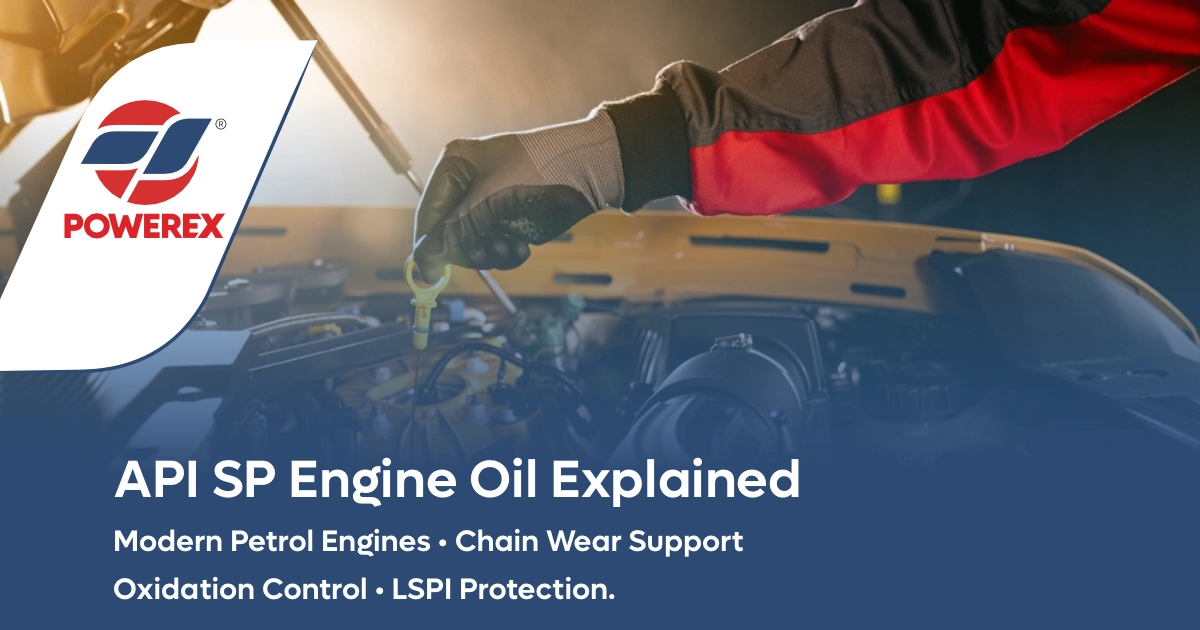
API SP is a petrol engine oil performance specification developed for modern engines. It is designed to provide improved protection against oxidation, deposits, timing chain wear and low-speed pre-ignition related issues in suitable engines.
In simple words, API SP oil is made for engines that need advanced protection, cleaner performance and stable lubrication under modern driving conditions.
Why API SP Is Important for Modern Petrol Cars
Many modern petrol cars use smaller, more efficient and technically advanced engines. These engines may include turbocharging, direct fuel injection, low-viscosity oil requirements and higher operating stress.
API SP engine oil helps support these modern engine needs by offering better control over oil degradation, deposits and wear-related concerns when the oil is used according to manufacturer recommendation.
Main Benefits of API SP Engine Oil
- Supports improved oxidation control during engine operation.
- Helps reduce deposit formation in suitable petrol engines.
- Supports timing chain wear protection in compatible engines.
- Helps address low-speed pre-ignition related performance needs in modern petrol engines.
- Supports cleaner engine operation under regular service conditions.
- Works well with low-viscosity oil grades where recommended.
API SP vs API SN: What Is the Difference?
| Point | API SN | API SP |
|---|---|---|
| Performance Level | Older petrol engine oil category | Updated petrol engine oil category |
| Modern Engine Support | Suitable where API SN is recommended | Suitable where API SP is recommended |
| Oxidation Control | Good | Improved performance requirement |
| Timing Chain Wear | Basic category-level support | Enhanced requirement for modern engines |
| LSPI Related Protection | Not the main focus | Designed to address LSPI-related needs in suitable engines |
What Is LSPI and Why Does It Matter?
LSPI means Low-Speed Pre-Ignition. It is a combustion-related issue that can occur in some modern petrol engines, especially smaller turbocharged direct-injection engines under certain conditions.
API SP oils are designed with updated performance requirements to help address LSPI-related protection needs in suitable engines. This makes API SP important for many new-generation petrol cars.
Does Every Car Need API SP Engine Oil?
No. Every car does not automatically need API SP oil. The correct engine oil depends on the vehicle manufacturer’s recommendation. Some vehicles may require API SN, while newer vehicles may recommend API SP.
If your owner’s manual recommends API SP, then you should use engine oil that clearly mentions API SP along with the correct viscosity grade such as 0W-20 or 5W-30.
Can API SP Oil Be Used in Older Cars?
In many cases, API SP may be compatible with earlier API petrol categories, but the final selection should depend on the vehicle manufacturer’s recommendation, viscosity grade and engine condition.
Do not change oil grade or specification only because a newer category is available. Always match the oil with the vehicle’s actual requirement.
API SP and Low-Viscosity Engine Oils
Many modern vehicles use low-viscosity engine oils such as 0W-20 and 5W-30. These oils are designed for faster oil circulation and efficiency-oriented engine design.
API SP performance combined with the correct viscosity grade can help support modern petrol engine protection, cleaner operation and smooth driving performance.
How to Select the Right API SP Engine Oil
- Check the owner’s manual for the recommended viscosity grade.
- Confirm whether API SP is required or recommended.
- Use 0W-20, 5W-30 or other grade only where specified.
- Choose oil suitable for petrol engine application.
- Avoid mixing different oil grades unnecessarily.
- Follow the recommended oil change interval.
Powerex API SP Engine Oil Options
Powerex offers API SP passenger car engine oils for modern petrol car applications, including low-viscosity oil options where API SP performance and suitable viscosity grade are required.
Powerex API SP oils are designed for users who need technically suitable car engine oils for modern vehicle requirements, dealership supply, workshop service and bulk lubricant needs.
Final Recommendation
API SP engine oil is important for many modern petrol cars because it supports updated performance requirements such as oxidation control, deposit control, timing chain wear protection and LSPI-related protection needs.
However, API SP should always be selected with the correct viscosity grade and according to the vehicle manufacturer’s recommendation.
For passenger car engine oil selection, dealership enquiry or bulk lubricant supply, contact Powerex Petrochem Private Limited.
API SP Engine Oil Selection Guide
| Requirement | Recommended Selection |
|---|---|
| Modern petrol car requiring API SP | Use API SP engine oil with the manufacturer-recommended viscosity grade |
| Vehicle requiring 0W-20 API SP | Select 0W-20 API SP oil only where this grade is recommended |
| Vehicle requiring 5W-30 API SP | Select 5W-30 API SP oil where this grade is specified |
| Older vehicle requiring API SN | Follow the owner’s manual and check compatibility before upgrading |
| Confusion between API SN and API SP | Use the API category recommended by the vehicle manufacturer |